I really enjoyed the promising practices event we went to on November 5th. Almost everything about it was educational but some parts were not.
The session I was in was session H called Art and Diverse Expressions.
The first workshop was called Honoring Diverse Expression through Artistic Processes and it was conducted by Virginia Freyermuth. She discussed how art is more than just self expression. She said that art can lead to personal change/ social change. I completely agreed with this statement because I am a music major. Although it is a different form of art I still feel that any form of art can lead to personal change and social change. We worked on a project called prayer sticks originally of Native American tradition. Instead she called them hope sticks. Everything on the stick was relevant meaning anything from the colors of the beads or number of beads, to the number of times one wraps string around the stick. There is also symbolic meaning for the type of tree a stick came from. If the hope/prayer stick was given as a gift it was a very meaningful present. This project when done with the kids is to help them understand that there will always be hope. Another favorite thing that she had said was that there is an inner artist in everyone.
The second workshop was called Celebrating Diversity- Using Art Merged with Literacy conducted by Kristen Vito-Silva. She discussed about how when the students walk into the classroom it is a blank canvas and they will be creating their own space with all of their own art work. "Art can be anywhere and everywhere, even woven into everyday teaching practices." In order to work with them, you need to know your students, their background, and what makes them tick. She gave us a packet that included some of their work. My favorite one was this one:
Heights
High places
Can't go to the edge
Close
Heart starts beeping
Like never before
Try to get
To the edge
Feel like
Somebody is pulling me
Away
Scitter scatter
Right out of the room
On a boat I feel like
I am going to fall over
Tall building
My blood
Rushes
Really fast
I feel like
It's trying to
Pull me away
From the edge
Fears started
When I cracked my head
Open
Just the fact that this came from a young child is amazing to me.
The workshops were my most favorite part of the whole conference. I did not enjoy the teen empowerment was not useful because they were doing ice breakers which would have been more useful in small groups. I found the panel informative but I did not take many notes on it so I sadly do not have a ton to say about that.
In conclusion, I am very surprised that I enjoyed the conference but I am glad I went and maybe I will go next year...
Wednesday, November 30, 2011

Talking Points #5 Kahne and Westheimer extended comments
In The Service Of What? The Politics of Service Learning
I used this post as extended comments from Elyssa's reflection on this article.
I agree that the students would get more out of the experience in Ms. Adams' class project than Mr. Johnson's. All the students in Mr. Johnson's class tried to be a part of the solution but they did not try to hard to find the exact root of the problem. Ms. Adams' class examined all aspects of homelessness such as political, social, and economic causes.
I also kind of agree with her point about service learning having a negative effect. In my high school it was a requirement to do a certain number of community service hours. When senior week came along we all were separated and divided among different community service opportunities. I was required to go to the Greater Boston Food Bank. All we did was divide foods that were brought in as donations. I honestly did not feel like i knew where it would go, how it would be distributed, or anything like that. I only felt as though I was doing this just so I could graduate. We never had any interactions with the people we would be helping which would probably have been a better way of showing us what we are doing to help.
Elyssa makes a good point about how in order to help the less fortunate to the best of our ability, we must have a hands on first hand look at the problem.
I used this post as extended comments from Elyssa's reflection on this article.
I agree that the students would get more out of the experience in Ms. Adams' class project than Mr. Johnson's. All the students in Mr. Johnson's class tried to be a part of the solution but they did not try to hard to find the exact root of the problem. Ms. Adams' class examined all aspects of homelessness such as political, social, and economic causes.
I also kind of agree with her point about service learning having a negative effect. In my high school it was a requirement to do a certain number of community service hours. When senior week came along we all were separated and divided among different community service opportunities. I was required to go to the Greater Boston Food Bank. All we did was divide foods that were brought in as donations. I honestly did not feel like i knew where it would go, how it would be distributed, or anything like that. I only felt as though I was doing this just so I could graduate. We never had any interactions with the people we would be helping which would probably have been a better way of showing us what we are doing to help.
Elyssa makes a good point about how in order to help the less fortunate to the best of our ability, we must have a hands on first hand look at the problem.
Sunday, October 23, 2011
Random Post
This is a little random but it had to do with the week that we talked about the GLSEN articles. I thought of a play the I have read called "The Laramie Project."
It is a true story basedin Laramie, Wyoming on Matthew Shepard, an openly gay college student beaten and left chained to a fence to die because of his sexuality.
It has also been made into a movie that I suggest everyone watch the movie or read the play.
It is a true story basedin Laramie, Wyoming on Matthew Shepard, an openly gay college student beaten and left chained to a fence to die because of his sexuality.
It has also been made into a movie that I suggest everyone watch the movie or read the play.
Talking Points #4 Christensen Hyperlinks
Unlearning the Myths That Bind Us
While reading this article the first thing that popped into my head was the children's movie "Cinderella." I think that this movie has a lot of ability to influence the thoughts and mindset about others for children.
http://www.urbandictionary.com/define.php?term=cinderella%20complex
The Cinderella Complex is all about girls just waiting for their prince charming to come along and save them. It also has to do with the idea of beauty. Ever notice that most of the original Disney Princesses, such as Cinderella and Aurora, are blonde with blue eyes.

 It was later that Disney actually added a brunette princess, Belle. Still when it comes to beauty for girls in disney movies, all the princesses a skinny, light skinned, and they all have a beautiful ball gown that fits them perfectly.
The next thing I thought of when I was reading this article was this video by Jenna Marbles.
She makes very good points during her video. She focuses mostly on the Disney princesses.
It's Jenna Marbles... Sorry about the language, it's how she is in her videos....
While reading this article the first thing that popped into my head was the children's movie "Cinderella." I think that this movie has a lot of ability to influence the thoughts and mindset about others for children.
http://www.urbandictionary.com/define.php?term=cinderella%20complex
The Cinderella Complex is all about girls just waiting for their prince charming to come along and save them. It also has to do with the idea of beauty. Ever notice that most of the original Disney Princesses, such as Cinderella and Aurora, are blonde with blue eyes.
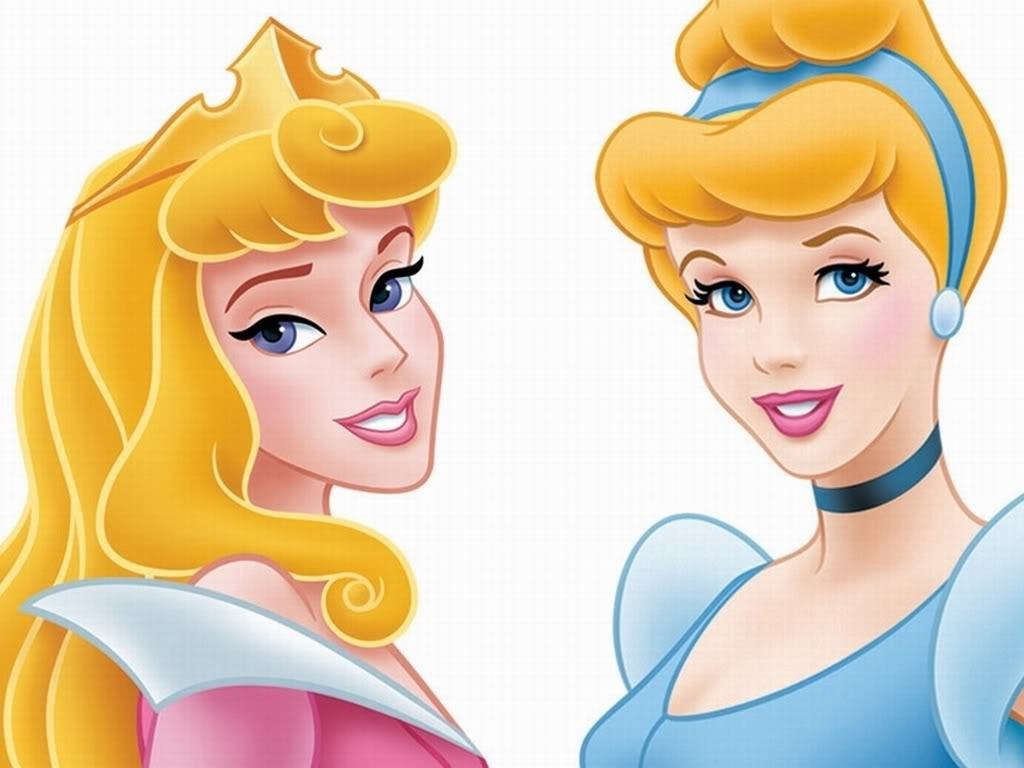

The next thing I thought of when I was reading this article was this video by Jenna Marbles.
She makes very good points during her video. She focuses mostly on the Disney princesses.
It's Jenna Marbles... Sorry about the language, it's how she is in her videos....
- Completely inappropriate for young girls; Jasmine is a genie, ariel has barely any clothes on
- All the evil characters are old, ugly, or big
- Main goal is to find a prince to take care of them, and live "Happily Ever After"
- Most of them do not listen to their parents directions
I really enjoyed this article in general because it is very true. Most children are easily influenced by these movies.
Talking Points #3: GLSEN article reflection
Harsh Realities Finds Transgender Youth Face Extreme Harassment in School
This article discusses transgender youth harassment in school.
"Nearly nine out of 10 transgender students experienced verbal harassment at school in the past year because of their sexual orientation and gender expression, more than half experienced physical harassment because of their sexual orientation and gender expression and more than a quarter experienced physical assault because of their sexual orientation and gender expression."
This article made me really think about how much harassment there is in school, whether its by students or teachers. I know of a couple of students from my high school that are transgender. One of my friends, who I knew as Eva has just recently changed her name to Evan. Since the end of high school, I feel as though she has become more comfortable with herself. In our high school, most of the students were not very accepting to the LGBT community except for those students in our Gay-Straight Alliance. It is sad but there were a lot of students harassed in school because of their sexual orientation and/or their gender expression. I heard many people referring to some of my friends in the LGBT community as"faggot" or "dyke," it really bother me. Honestly, even though I was bothered by it I was usually just a bystander and never did much about it, even though I felt bad for not speaking up.
Similar to the statistics in the article, few of the teachers from my high school ever said anything if they heard a homophobic remark. Unlike the article, as far as I knew, there were no incidents of teachers making homophobic remarks to students.
The statistics in the article were very upsetting cause I had never realized how bad harassment towards the LGBT community was.
Now that I have read this article I want to do something about the harassment that occurs. I have been considering joining ALLIED if I had the time to keep up with it because I would love to be a part of the solution rather than just a bystander.
This article discusses transgender youth harassment in school.
"Nearly nine out of 10 transgender students experienced verbal harassment at school in the past year because of their sexual orientation and gender expression, more than half experienced physical harassment because of their sexual orientation and gender expression and more than a quarter experienced physical assault because of their sexual orientation and gender expression."
This article made me really think about how much harassment there is in school, whether its by students or teachers. I know of a couple of students from my high school that are transgender. One of my friends, who I knew as Eva has just recently changed her name to Evan. Since the end of high school, I feel as though she has become more comfortable with herself. In our high school, most of the students were not very accepting to the LGBT community except for those students in our Gay-Straight Alliance. It is sad but there were a lot of students harassed in school because of their sexual orientation and/or their gender expression. I heard many people referring to some of my friends in the LGBT community as"faggot" or "dyke," it really bother me. Honestly, even though I was bothered by it I was usually just a bystander and never did much about it, even though I felt bad for not speaking up.
Similar to the statistics in the article, few of the teachers from my high school ever said anything if they heard a homophobic remark. Unlike the article, as far as I knew, there were no incidents of teachers making homophobic remarks to students.
The statistics in the article were very upsetting cause I had never realized how bad harassment towards the LGBT community was.
Now that I have read this article I want to do something about the harassment that occurs. I have been considering joining ALLIED if I had the time to keep up with it because I would love to be a part of the solution rather than just a bystander.
Sunday, October 2, 2011
"Aria" by Richard Ridriguez
Argument:
Rodriguez argues in this piece that English is the dominant language in the classroom and any other language is private but this in turn causes english to become the main language in the home to prepare children for the classroom.
Rodriguez went through elementary school afraid of speaking English in the classroom. Then when the nuns came and talked to his parents, they encouraged them to encourage English in the home more than Spanish to "help" their children adapt to the "public language". This in turn created a language barrier between the Spanish speaking parents and their children for whom English became their primary language. I agree with Rodriguez in the end of his article that bilingual children now a days lose a sense of their individuality. Private individuality and public individuality are very different. In order to gain one the other gets a bit lost. When conforming to society and gaining a sense of public individuality, the private individuality gets lost in the darkness.
Rodriguez argues in this piece that English is the dominant language in the classroom and any other language is private but this in turn causes english to become the main language in the home to prepare children for the classroom.
Rodriguez went through elementary school afraid of speaking English in the classroom. Then when the nuns came and talked to his parents, they encouraged them to encourage English in the home more than Spanish to "help" their children adapt to the "public language". This in turn created a language barrier between the Spanish speaking parents and their children for whom English became their primary language. I agree with Rodriguez in the end of his article that bilingual children now a days lose a sense of their individuality. Private individuality and public individuality are very different. In order to gain one the other gets a bit lost. When conforming to society and gaining a sense of public individuality, the private individuality gets lost in the darkness.
Talking Point #1 McIntosh "White Privilege" quotes
Pg. 1
"I have come to see white privilege as an invisible package of unearned assets that I can count on cashing in each day, but about which I was "meant" to remain oblivious. White privilege is like an invisible weightless knapsack of special provisions, maps, passports, code books, visas, clothes, tools, and blank checks."
This quote describes the power and privilege of white people that is there because of the color of their skin. They have not necessarily earned any of these privileges. These privileges are always carried like they are in an invisible knapsack like McIntosh says. I think that the most prevalent privileges in this "knapsack" described by McIntosh are what the author calls code books and blank checks.
Pg. 4
"For me white privilege has turned out to be an elusive and fugitive subject. The pressure to avoid it is great, for in facing it I must give up the myth of meritocracy. If these things are true, this is not such a free country; ones' life is not what one makes it; many doors open for certain people through no virtues of their own"
McIntosh is saying that white privilege is a hidden subject that no one really wants to discuss. If forced to face white privilege and discuss it, it makes us face the truth that most people get what they get through skin color, nationality, class, etc. rather than through earning these things.
"I have come to see white privilege as an invisible package of unearned assets that I can count on cashing in each day, but about which I was "meant" to remain oblivious. White privilege is like an invisible weightless knapsack of special provisions, maps, passports, code books, visas, clothes, tools, and blank checks."
This quote describes the power and privilege of white people that is there because of the color of their skin. They have not necessarily earned any of these privileges. These privileges are always carried like they are in an invisible knapsack like McIntosh says. I think that the most prevalent privileges in this "knapsack" described by McIntosh are what the author calls code books and blank checks.
Pg. 4
"For me white privilege has turned out to be an elusive and fugitive subject. The pressure to avoid it is great, for in facing it I must give up the myth of meritocracy. If these things are true, this is not such a free country; ones' life is not what one makes it; many doors open for certain people through no virtues of their own"
McIntosh is saying that white privilege is a hidden subject that no one really wants to discuss. If forced to face white privilege and discuss it, it makes us face the truth that most people get what they get through skin color, nationality, class, etc. rather than through earning these things.
Pg.4
"In proportion as my racial group was being made confident, comfortable, and oblivious, other groups were likely being made unconfident, uncomfortable, and alienated. Whiteness protected me from many kinds of hostility, distress, and violence, which I was being subtly trained to visit, in turn, upon people of color."
Being white, McIntosh was given information and privileges that made the author "confident, comfortable, and oblivious". Because we are white, we are given the idea that we have no hostility and are not violent. These ideas were slowly pushed into our minds as ideas about people of color because of our skin color. Skin color should not be the reason for this but sadly it is.
Subscribe to:
Comments (Atom)